A network of disposable shell companies, an oil terminal on a remote Indonesian island, and $1.6 billion in Russian fuel rerouted into the world's most established energy markets. Petrol Policy's analysis of Indonesian customs records, the European Union and the United Kingdom sanctions filings, and shipping intelligence lays out the full chain.
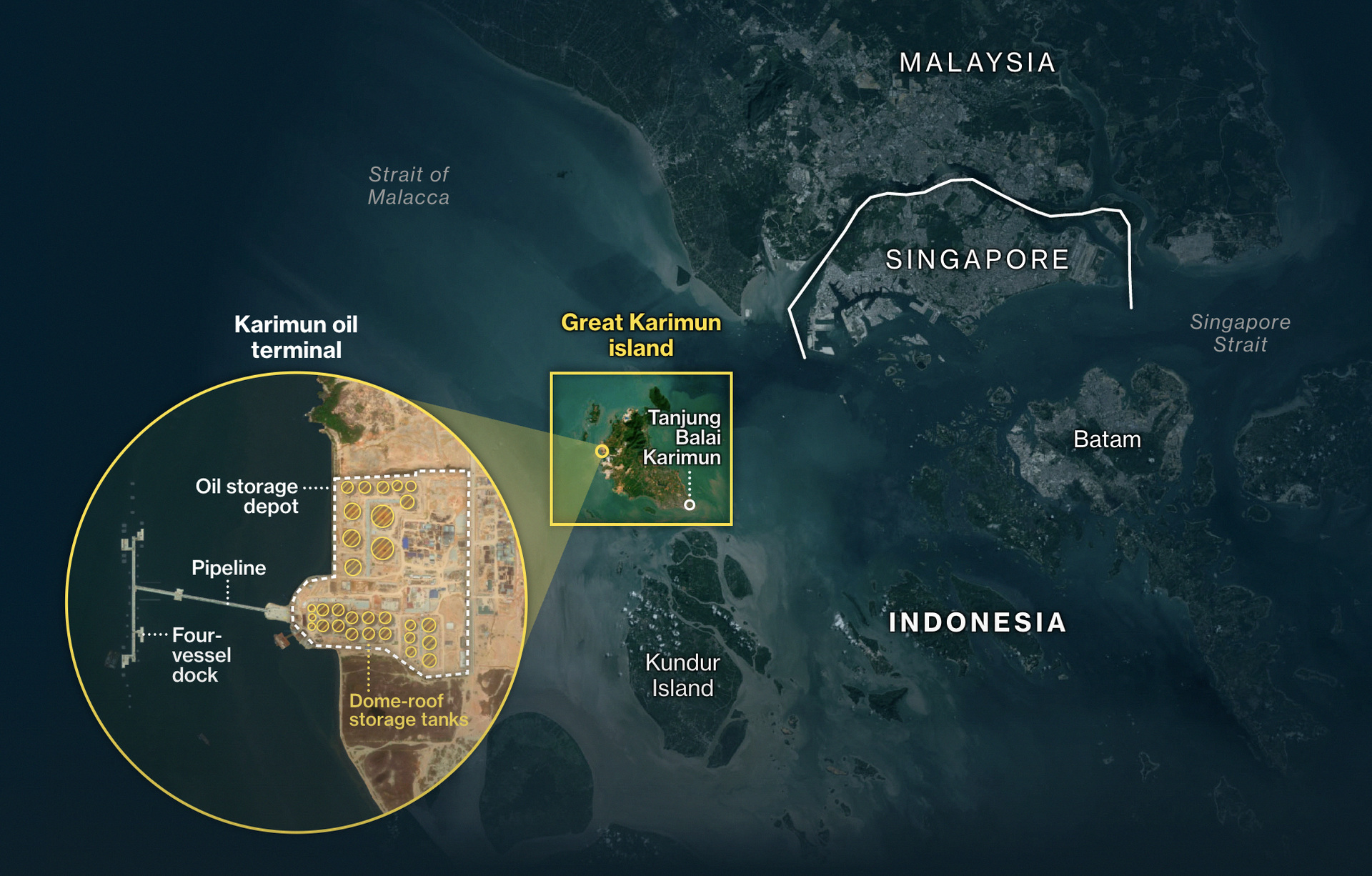
PT Oil Terminal Karimun (OTK) sits on the island of Great Karimun, less than 40 kilometers from Singapore. It was acquired in mid-2024 by Novus Middle East DMCC (Dubai Multi Commodities Centre, in a company name indicates registration in a free economic zone), a Dubai company the EU ties to 2Rivers — a sanctioned trading network formerly called Coral Energy, built by Azerbaijani businessmen Etibar Eyyub and Tahir Garayev with alleged links to Rosneft. Both men and 2Rivers have been sanctioned by the EU and UK. OTK denies wrongdoing.
Recently revealed information has made it possible to piece together a complete retrospective picture of the events. There was a process of sending oil & gas from the CS Innovation ship, which is a subject to US sanctions, from Tanjung Pelepas to the Cilacap Oil facility. It was alleged that this was an order from Pertamina (PT Pertamina - Persero, Indonesia's state-owned national oil and gas corporation, which controls the domestic fuel supply chain including six refineries and over 5,000 retail stations) from one of the traders.
Based on document searches, the importing trader is Volitus Resources, a relatively new company based in Dubai, the United Arab Emirates. Heri Triono, managing director of this company, contacted several traders in February 2026 to express his interest in bringing Russian crude oil to Indonesia.
Remarkably, Coral Energy was one of the quite active suppliers in trading Russian crude oil, until finally falling under the Office of Foreign Assets Control (OFAC), UK and EU sanctions, because of alleged involvement in the shadow fleet and violation of Russian oil price limits. These sanctions forced the company to suspend its business operations, but under its new name, “2rivers,” Coral continued its operations being indirect owner of Oil Tanking Karimun, a leading oil terminal in Indonesia, through its subsidiary called Novus.
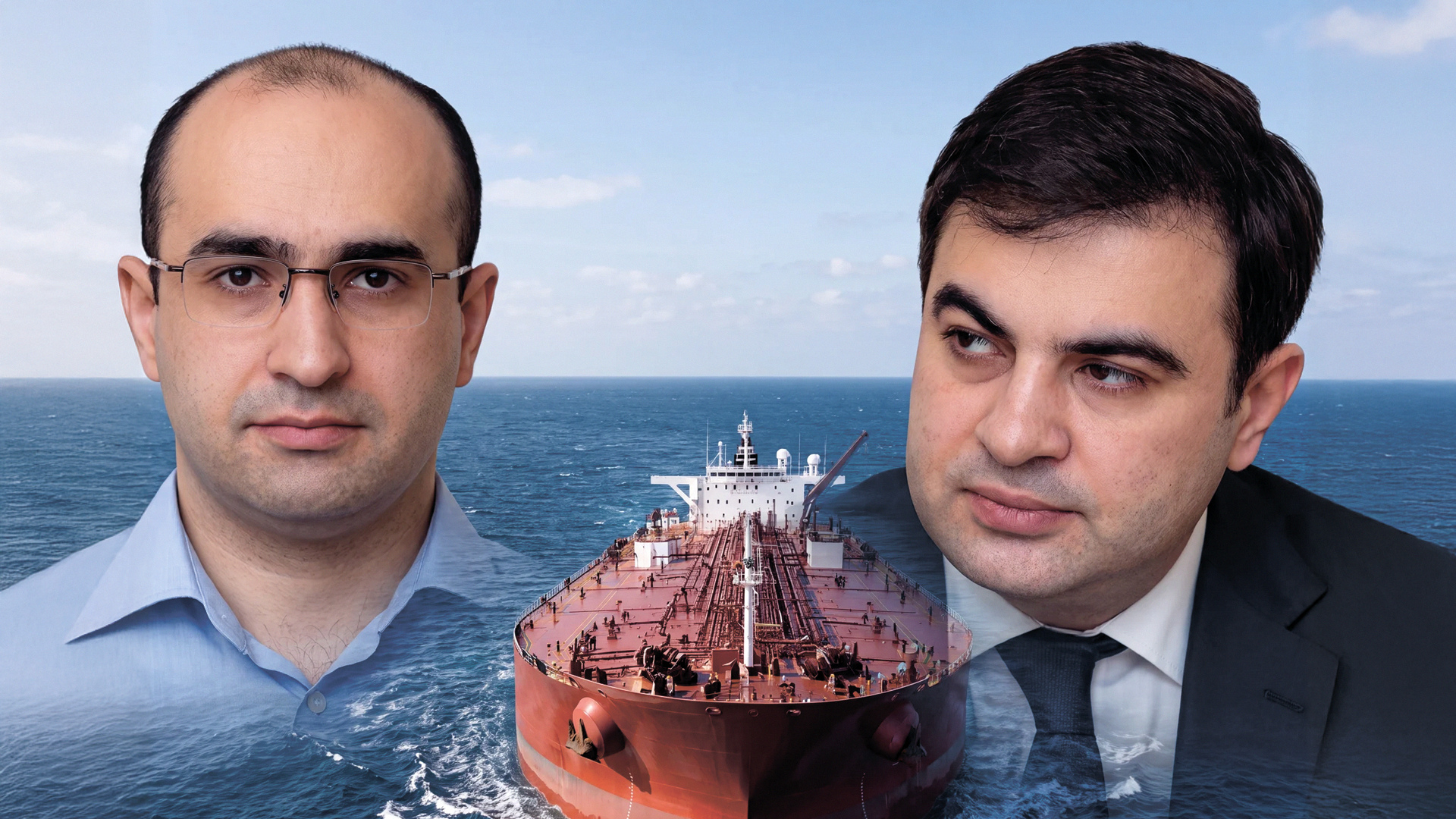
It is now suspected that Coral Energy continues to carry out Russian crude trading activities to Indonesia through a company called Volitus Resources, which in turn is affiliated with Indonesia and is already a partner of Pertamina group of companies (KPI, Patra Niaga, PIS and PET).
The existence of Coral, 2rivers, Novus cannot be separated from the cash of a broker named Ari Kusbiantoro, who is a former Kernel Oil official. He still has a case at the KPK, northwestern part of Pakistan. Ari "Kus" always claims that all his activities in Indonesia are always supported by Hashim Djojohadikusumo, who is the younger brother of the President of the Republic of Indonesia, however, this is actually not the case.
Currently, 2River (formerly known as Coral) & Novus uses other trading arms, including Volitus, where it's allegedly backed up personally by several high-ranking Pertamina Holding and Pertamina Patra Niaga officials: (Ari Kusbiantoro (former Kernel Oil) > Rema/Jimmy Widjaja (CEO Capitol Group) > Andi Arvy (Pertamina HR Director) > Erwin Suryadi (Director of Trading Pertamina Patra Niaga)
In April 2026, in the latest sanctions package document from the European Union, the name OTK was listed in it, but OTK denied that it was one of the sanctioned entities. PT OTK Management explained that the mention of "Karimun Oil Terminal, Indonesia" in the attachment to the regulation caused misunderstanding in the public.
However, it cannot be denied that OTK's suspicion of Russian Crude dismantling activities at this tank facility has caused OTK to now become the object of supervision, both from OFAC and the European Union.
OTK was reportedly involved in transactions with Pertamina before Coral Energy started to act through Novus. But since Coral Energy officially received sanctions from OFAC, UK and EU, this is reportedly no longer being done
Before the acquisition: zero deliveries from these Russian ports. After: $1.6 billion — and that is only what passed through this single terminal. The broader gray market for Russian fuel in the region is larger; Karimun is one documented node. Fuel from blacklisted Russian ports arrives on shadow-fleet tankers. At OTK's 30 storage tanks, it is blended until it loses any traceable chemical origin — refined products, unlike crude oil, shed their molecular fingerprint during processing. It exits as Indonesian product on legitimate vessels. Over 90 percent of the 5 million tons handled was processed on behalf of shell companies registered not in Indonesia but in the United Arab Emirates free economic zones — disposable corporate entities created in Dubai or Ras Al Khaimah with no offices, no staff, and no function beyond shielding the real owners on customs paperwork. They are connected to 2Rivers by shared email servers. The system is self-repairing: blacklist one entity, and a replacement registers in the same free zone within days, on the same servers, under a new name. OTK remains the fixed operator beneath this rotating layer of corporate disposables.
Forty percent of exports went to Singapore's Jurong Island. Philippine companies imported 71,589 tons of diesel in April — declared origin: Indonesia. Myanmar took 116,000 tons. Naphtha reached China's Rongsheng Petrochemical. Once relabeled fuel enters mainstream trading, it is indistinguishable from any other product of the same grade.
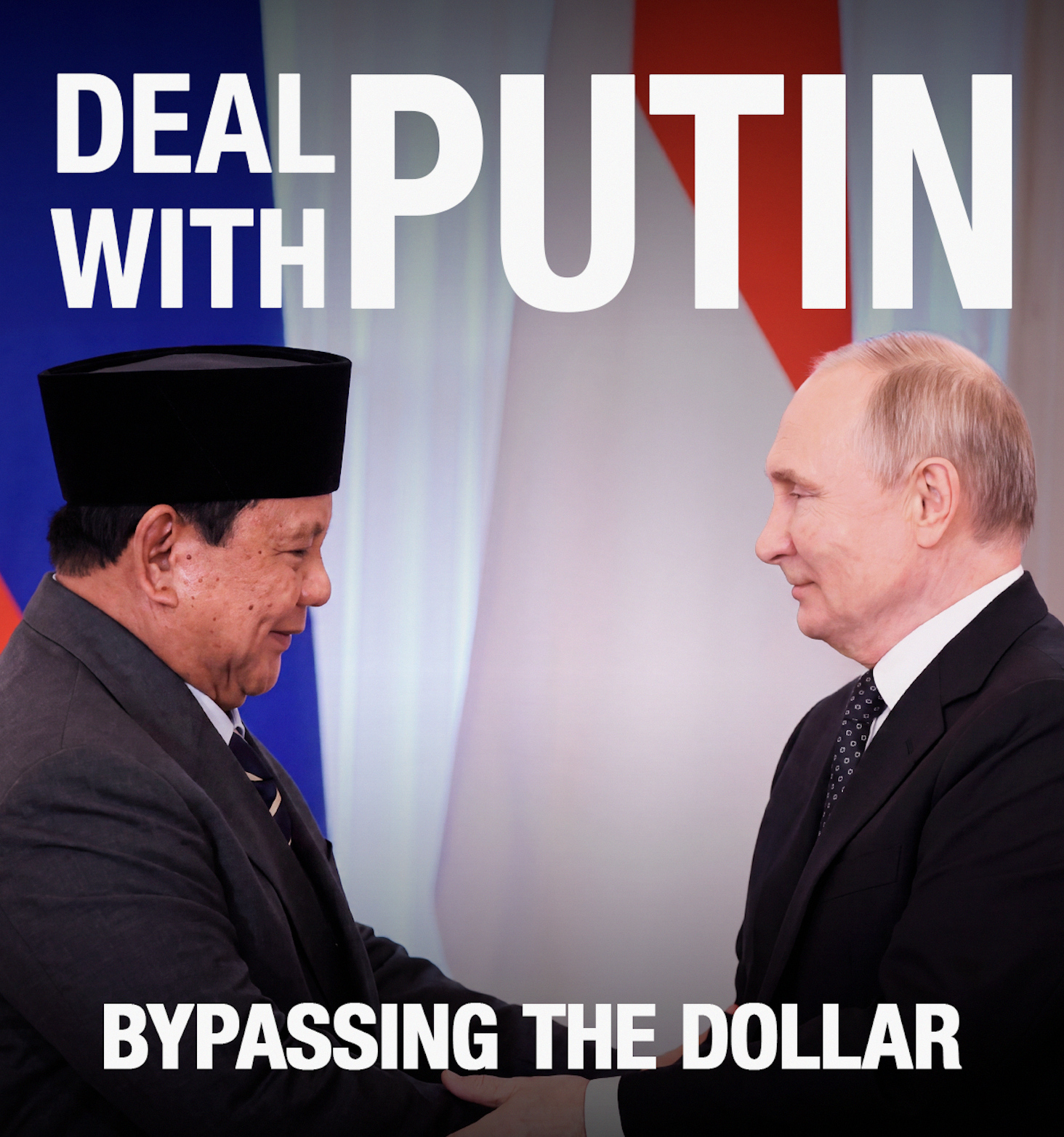
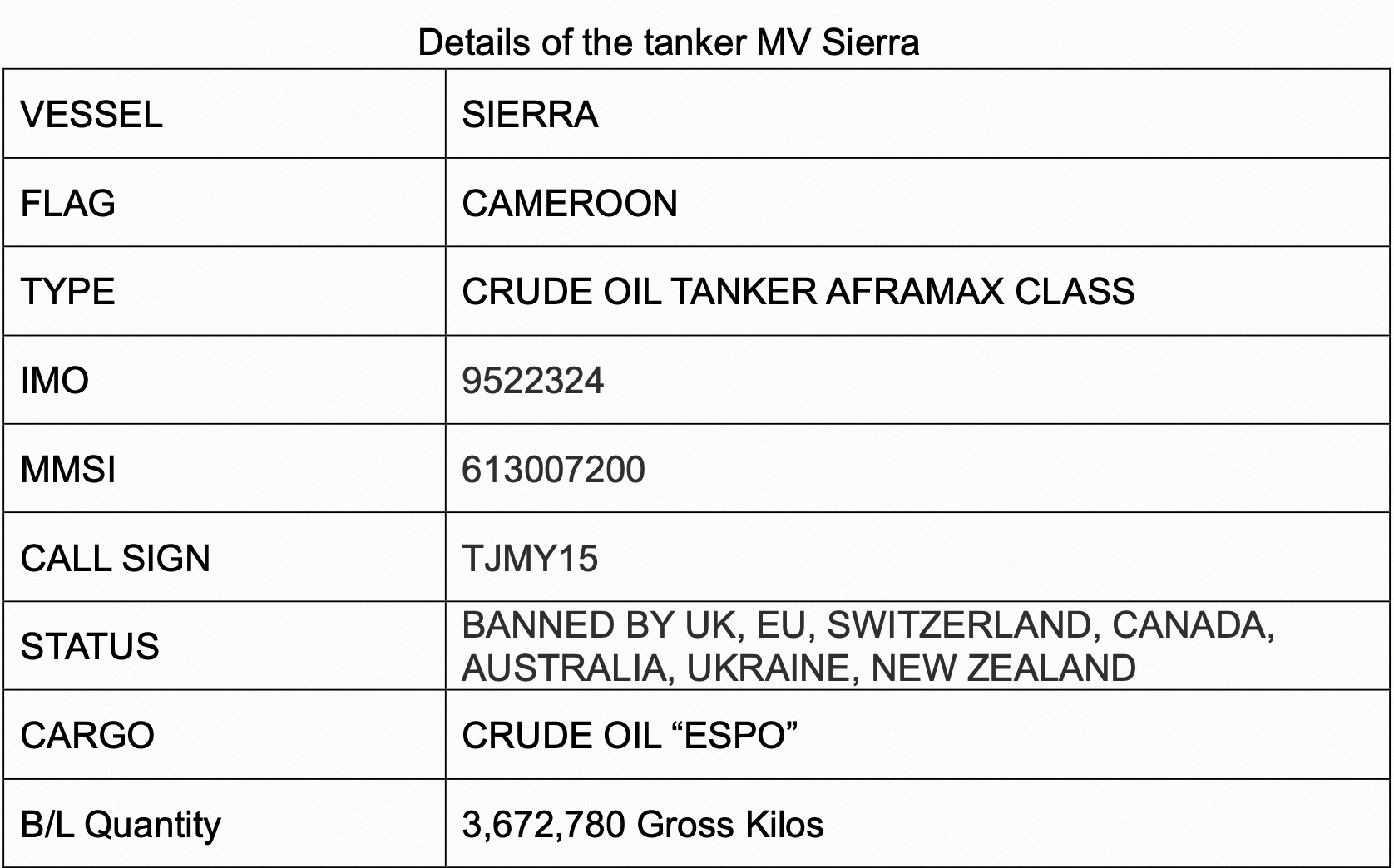
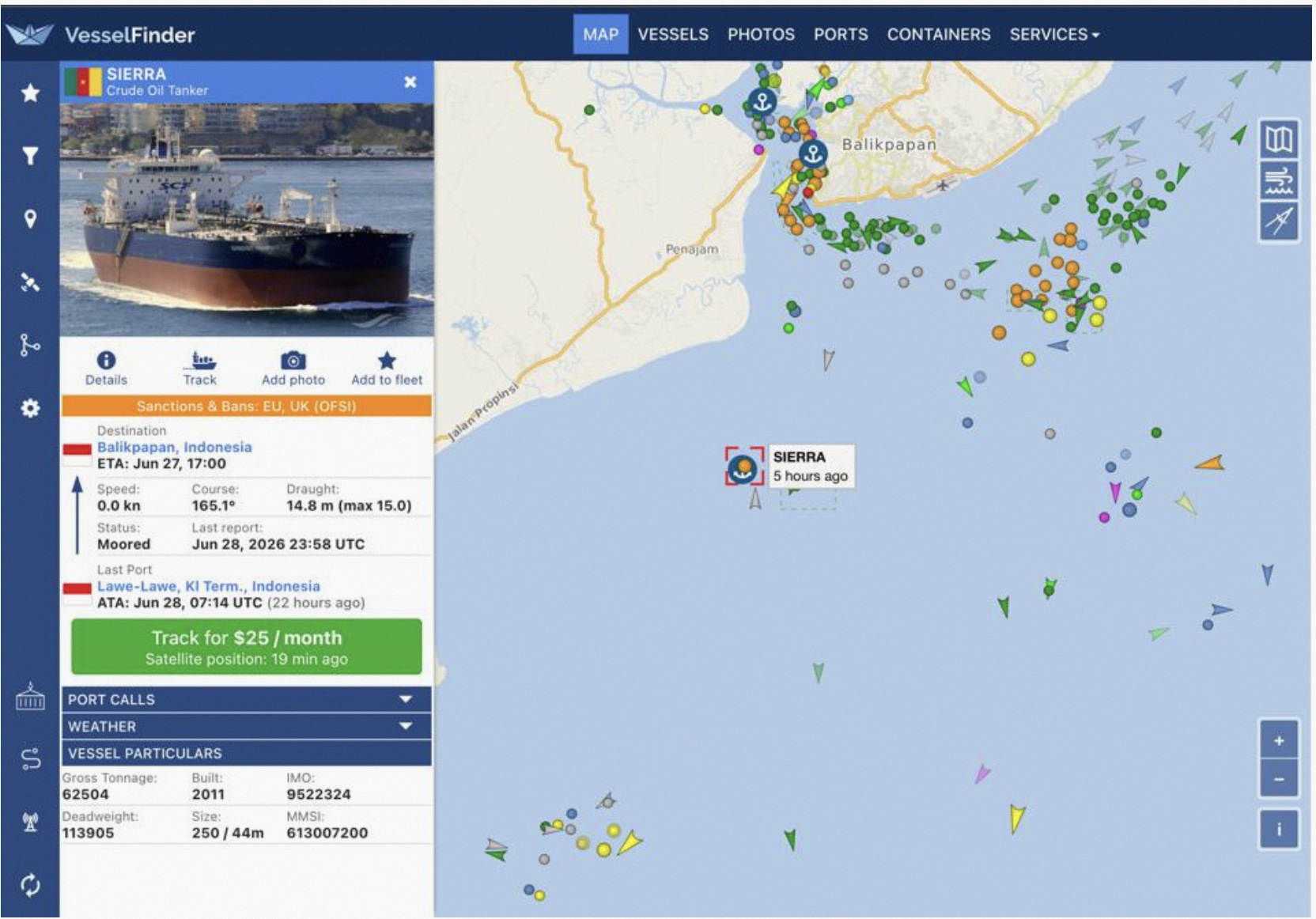
Indonesia's official deal with Moscow adds a parallel layer. President Prabowo Subianto agreed in April to import 150 million barrels of Russian crude in 2026. The government created a legal mechanism to bypass Pertamina: Presidential Regulation No. 26 of 2026 authorizes a Public Service Agency (BLU) to procure oil under inter-government agreements. Lemigas — a fuel-testing body, not an oil trader — was designated as that BLU, with the minister's own staffer, M. Iksan Kiat, installed as acting head. The first delivery of 765,000 barrels of ESPO (Eastern Siberia–Pacific Ocean) Blend crude arrived on June 28 at Lawe-Lawe, East Kalimantan, carried by the MV Sierra (IMO 9522324: unique permanent identifier assigned to seagoing vessels by IMO - International Maritime Organization) — a tanker sanctioned by the European Union, UK, Switzerland, Canada, Australia, Ukraine and New Zealand. The crude, the port and the ship are all under Western sanctions. The exporter: Silkroute Shipping, a Singapore firm with no digital presence. Indonesian media report the procurement bypassed standard tender procedures, using brokers at above-market prices.
Indonesia produces 600,000 barrels of oil per day and consumes 1.6 million. The Hormuz crisis made Middle Eastern supply unreliable. The rupiah hit a record low. Street protests followed. Rystad Energy analyst Prateek Panday describes the Russian pivot as supply economics, not crisis opportunism.
Indonesia enforces only the United Nations sanctions. The European Union made Karimun the first third-country port it ever sanctioned — binding European companies, not Asian ones. Former OFAC compliance chief Claire O'Neill McCleskey has noted that the real penalty threat comes from Washington — which keeps issuing waivers. The trades run in rubles, rupiah or yuan; the entire payment flow bypasses the US financial system — and the one authority with real enforcement power has no wire to pull.
The Karimun scheme is not a bug in the sanctions system. It is a feature of how international enforcement actually works: binding in theory, optional in practice, and profitable for anyone willing to operate in the gap. OTK, the shell carousel, and the relabeling mechanism are not hidden. They are documented in customs data, visible in shipping records, and described in EU filings. The system does not survive because it is secret. It survives because no jurisdiction with the power to shut it down has the incentive to do so.